Camera-1
Overview
There are many ESP32-based camera modules, such as ESP-EYE, ESP32-CAM, and M5 Camera Model. However, when applying these modules in real projects, developers often find that the available I/O pins are limited. In many cases, an additional Arduino or other controller must be connected to extend the I/Os, which increases hardware complexity and requires handling communication between multiple controllers, making development more difficult. To address these issues, we designed Camera-1.
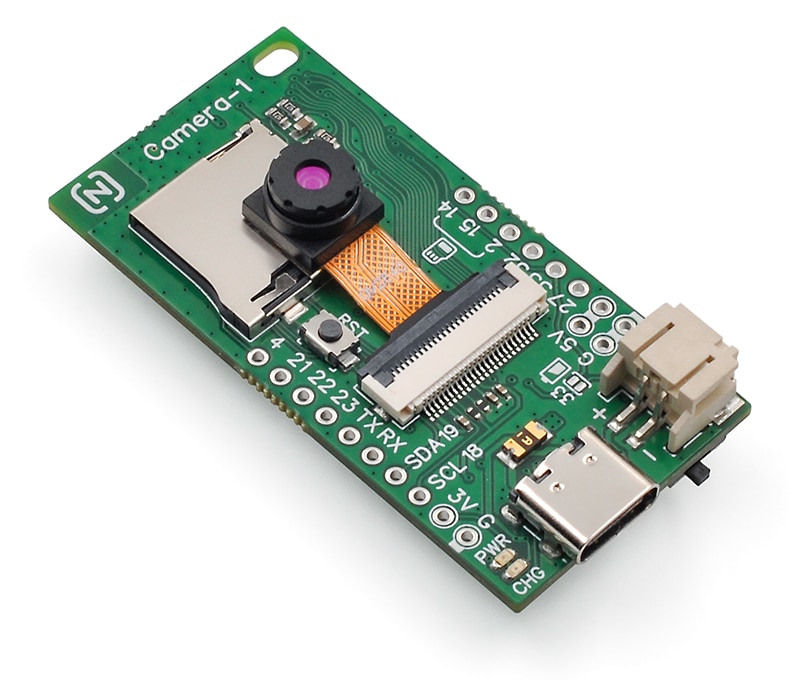
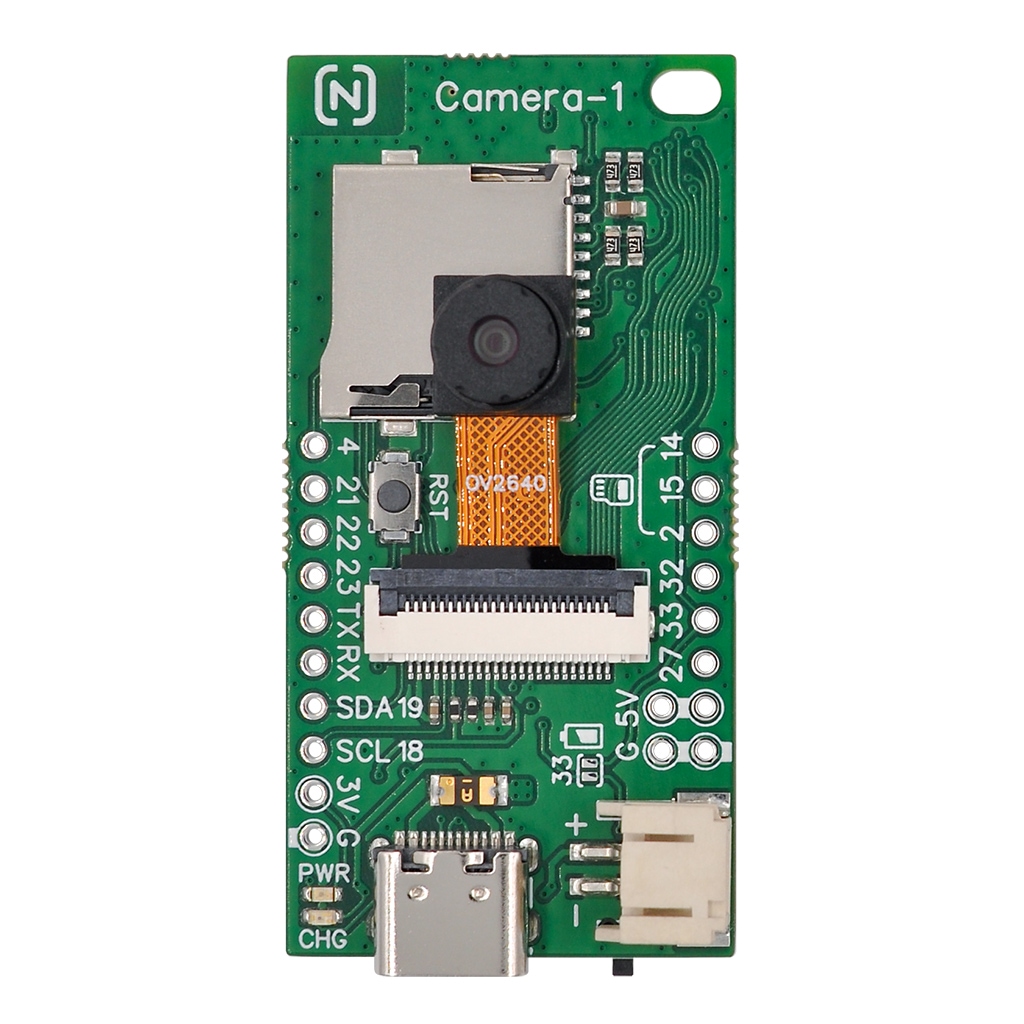
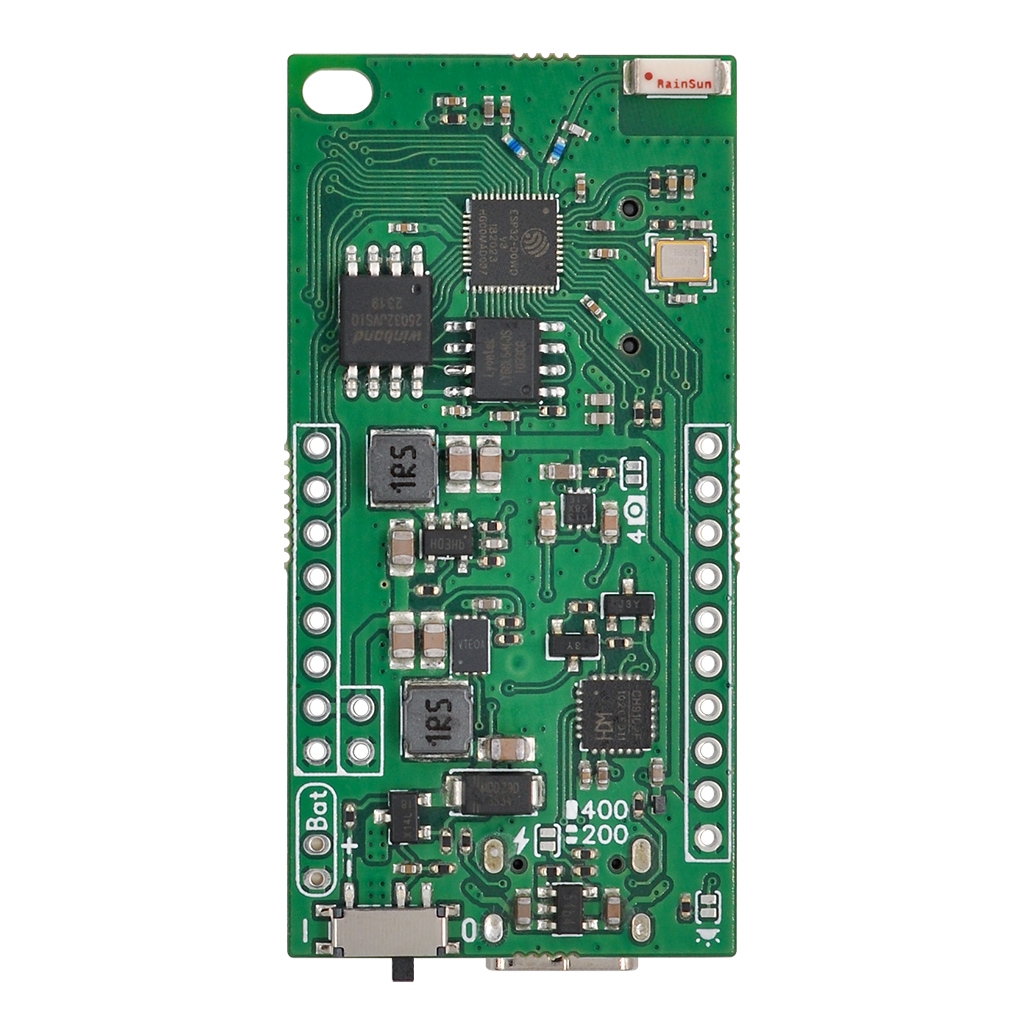
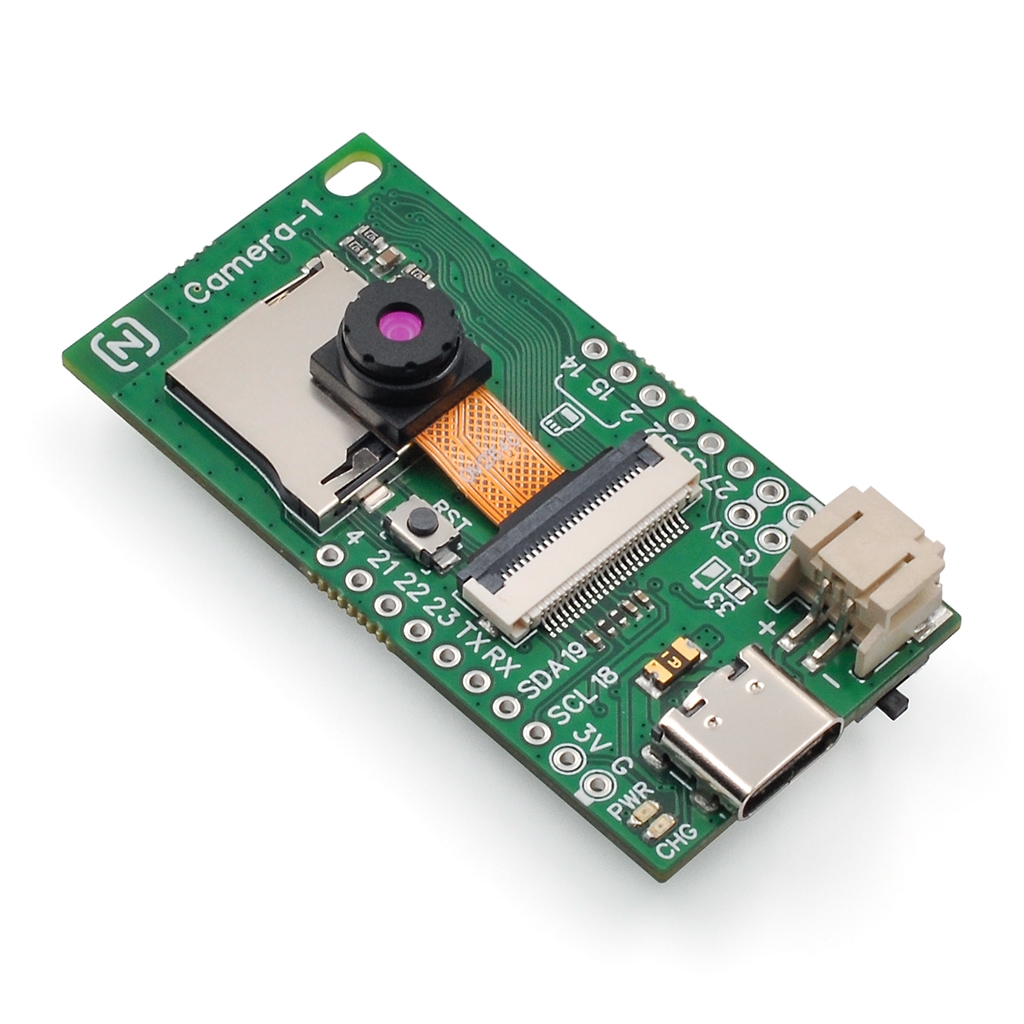
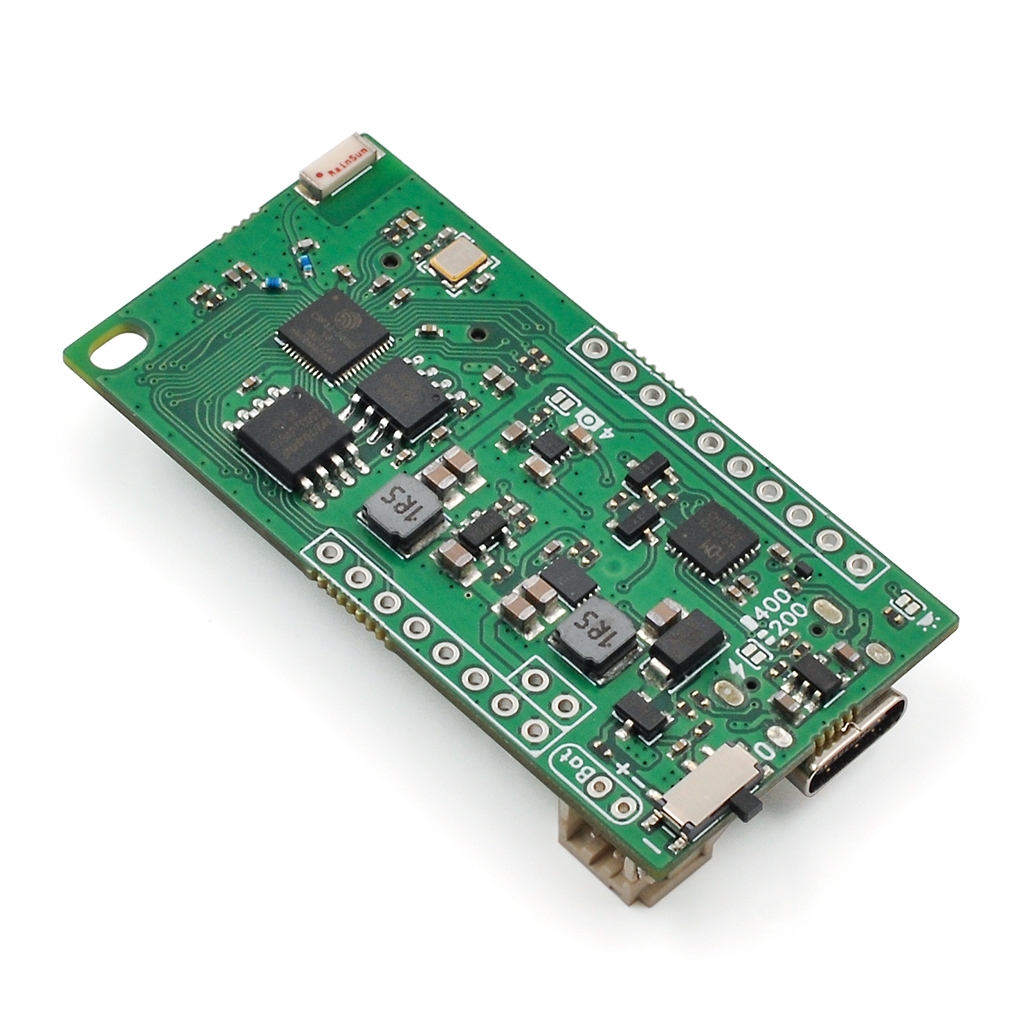
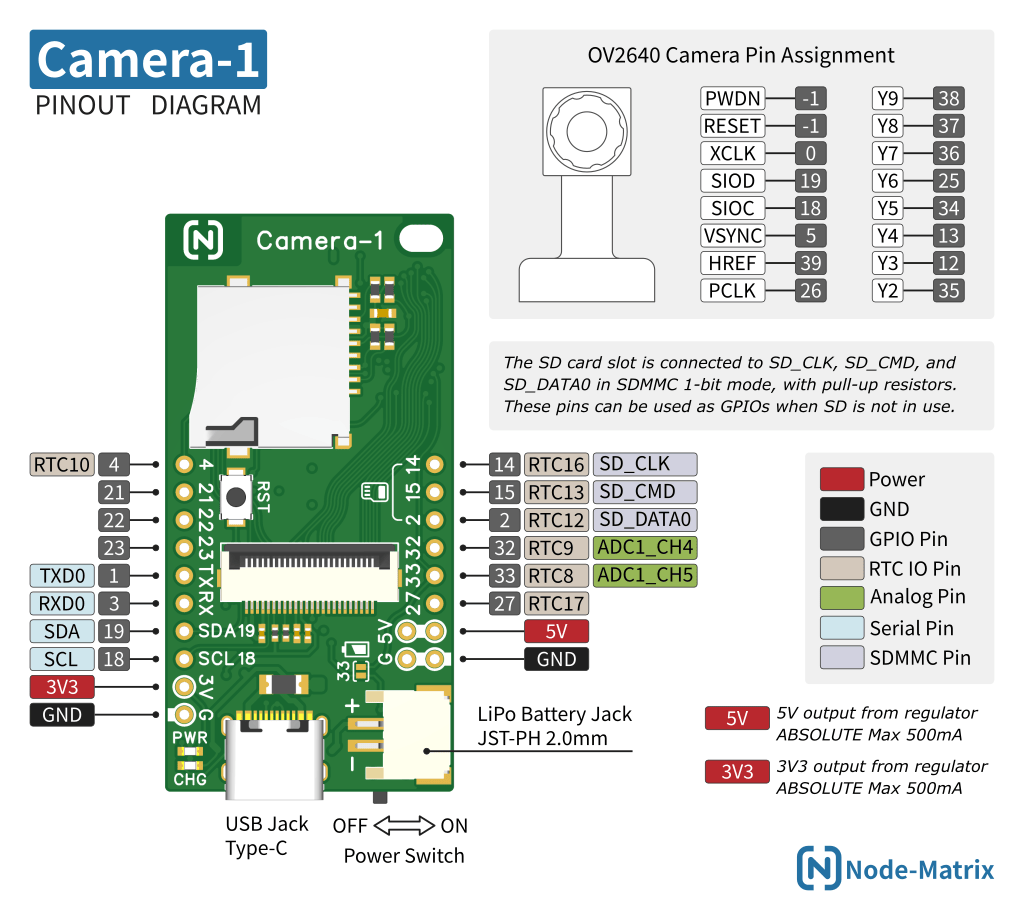
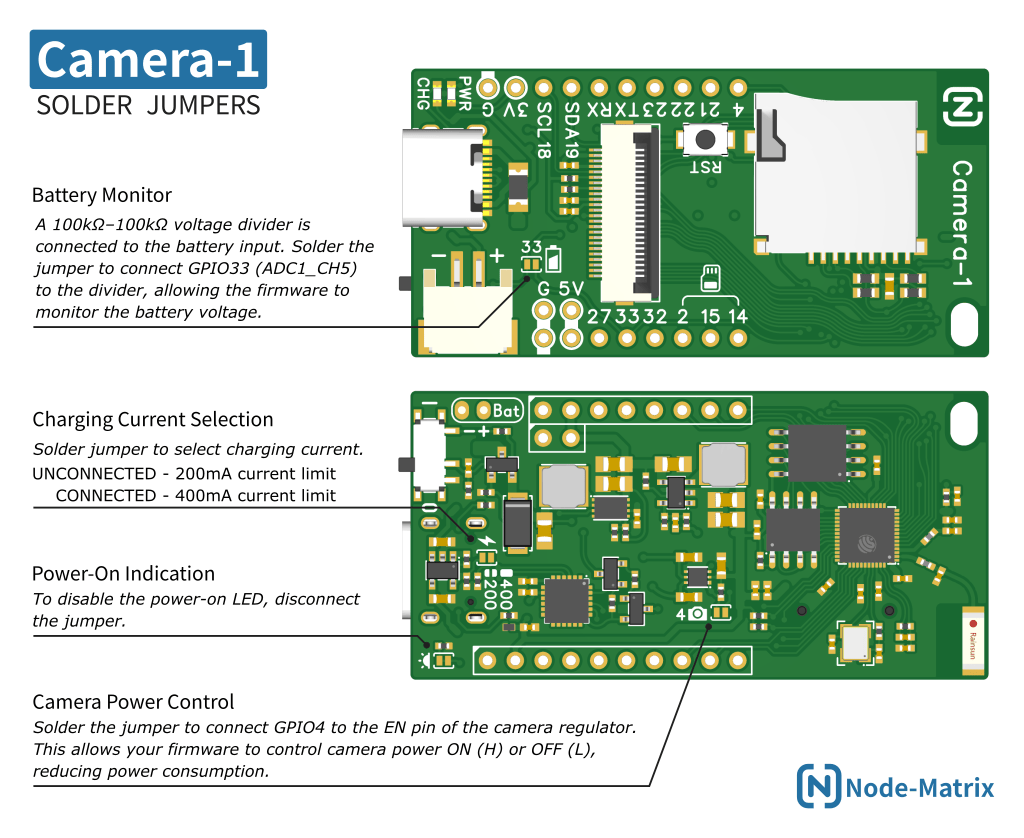
Camera-1 exposes as many usable pins as possible, including 10 GPIO pins (3 shared with the SD card slot), UART, and I2C interfaces. These GPIOs can be used to control additional peripherals such as servos, motors, and solenoids. By connecting a PCA9685 module via I2C, more PWM outputs can be obtained. The onboard DC-DC converter provides 5V and 3.3V power outputs (up to 500mA each), supplying power for external modules. Camera-1 integrates essential features such as a USB-to-serial interface, SD card slot, and charging management. It also supports battery voltage detection and camera power control through jumper configuration.
Camera-1 is ideal for applications that require both video capture and multiple peripheral controls, such as multi-wheel video rovers, vision-enabled robotic arms, or sensor-integrated camera gimbals.
Camera-1 supports mainstream development platforms such as Arduino, PlatformIO, and ESP-IDF.
Testing
The module comes with preloaded firmware. Follow the steps below to perform the test:
- Power the board via USB or the lithium battery connector, and switch the power toggle to ON (I).
- On your phone, scan for a Wi-Fi network starting with
Node-and connect to it (password:nodenode). - Open the web browser on your phone and enter
192.168.4.1in the address bar. - Through the webpage, you can view real-time video or modify network settings.
Features & Specifications
- Design based on ESP32 microcontroller
- 240MHz dual-core Tensilica LX6 processor
- 2.4GHz Wi-Fi 802.11b/g/n
- Dual-mode Bluetooth (classic and BLE)
- 4MB QSPI Flash
- 8MB QSPI PSRAM
- OV2640 image sensor
- Maximum resolution: 2M pixels (1600 x 1200)
- Output format: 8/10-bit raw, RGB, YUV and compressed
- Maximum image frame rates: UXGA 15fps, SVGA 30fps, CIF 60fps
- USB-C serial connector
- Onboard SD card slot
- 500mA 5V boost regulator output
- 500mA 3.3V step down regulator output
- Built-in battery charging capability
- 10 x GPIO, UART and I2C ports broken out
- Low power friendly
- RTC I/O broken out
- Battery monitor
- Camera power control
- Breadboard-friendly design
- Works with ESP-IDF and Arduino platforms
- Product dimensions: 26.4mm x 52.8mm x 11mm
Pinout & Jumpers