Camera-M
Overview
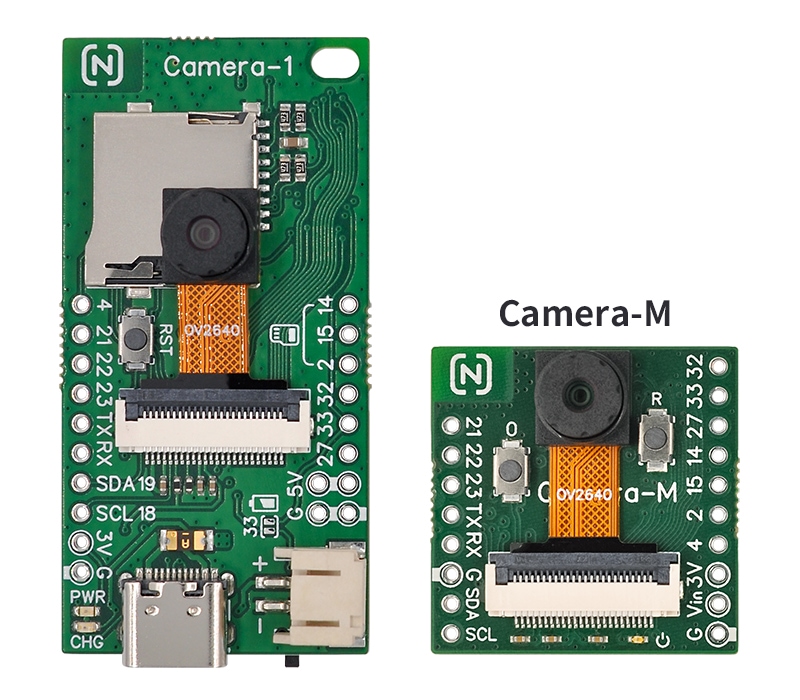
Camera-M is an ESP32-based camera module. Its pinout is compatible with the Camera-1 (layout slightly different), and their firmware can be used interchangeably. The main difference is that Camera-M adopts a more compact design, with only half the size of Camera-1. The USB serial interface, SD card slot, and charging management functions that are integrated into Camera-1 are provided by the optional Basic expansion board.
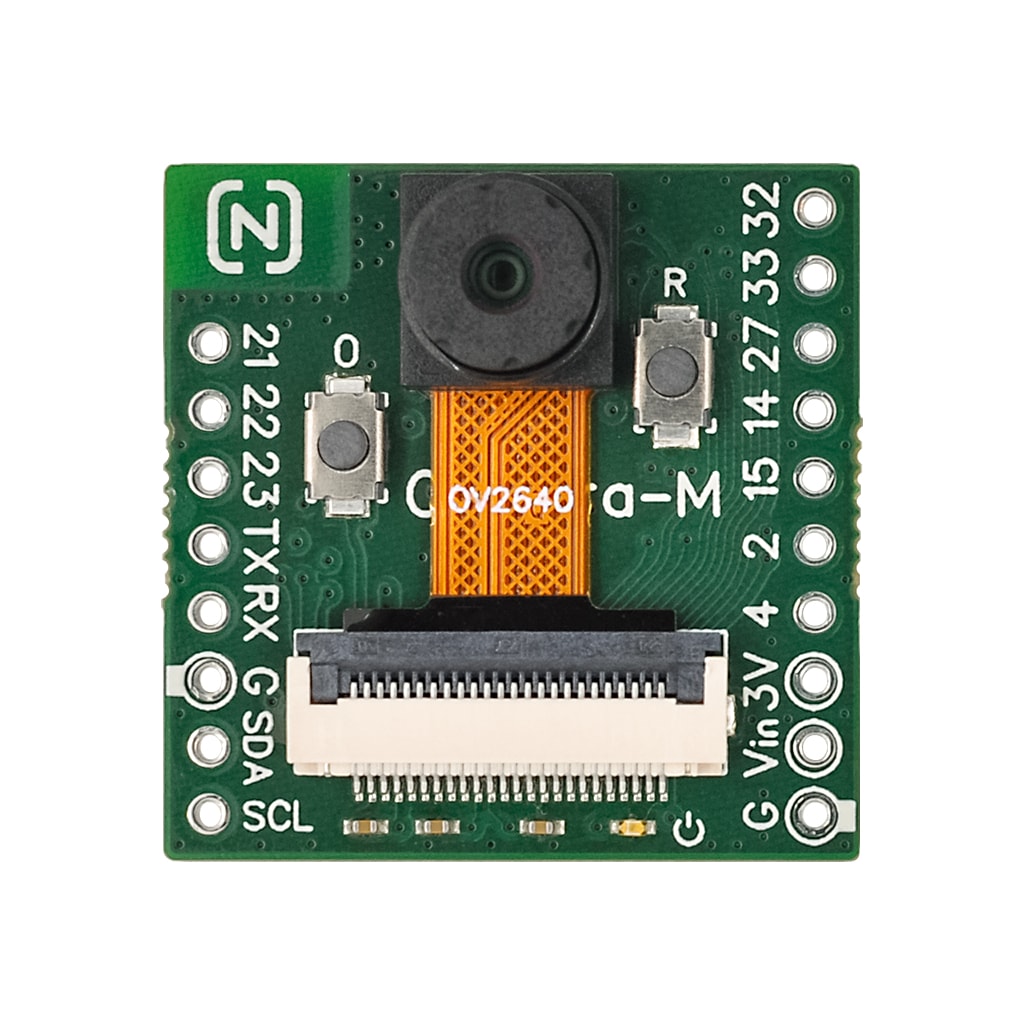
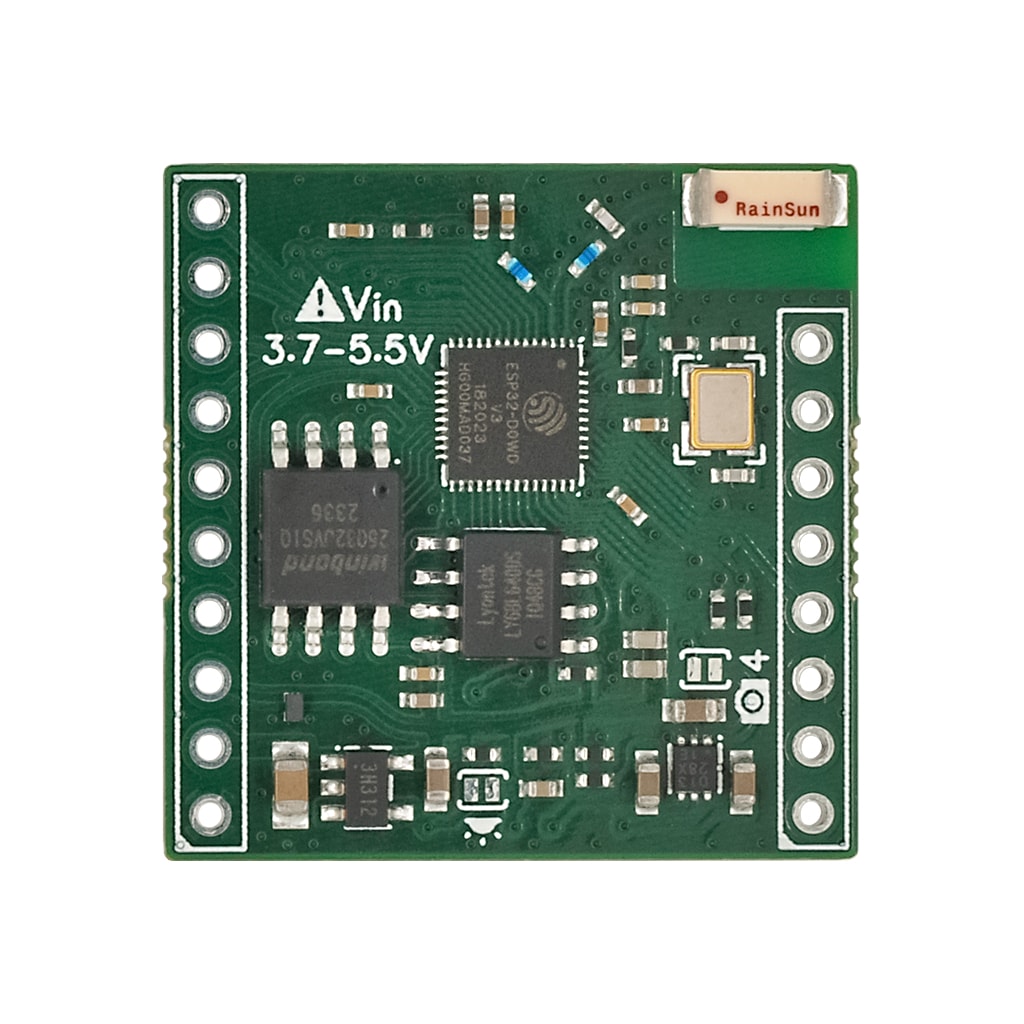
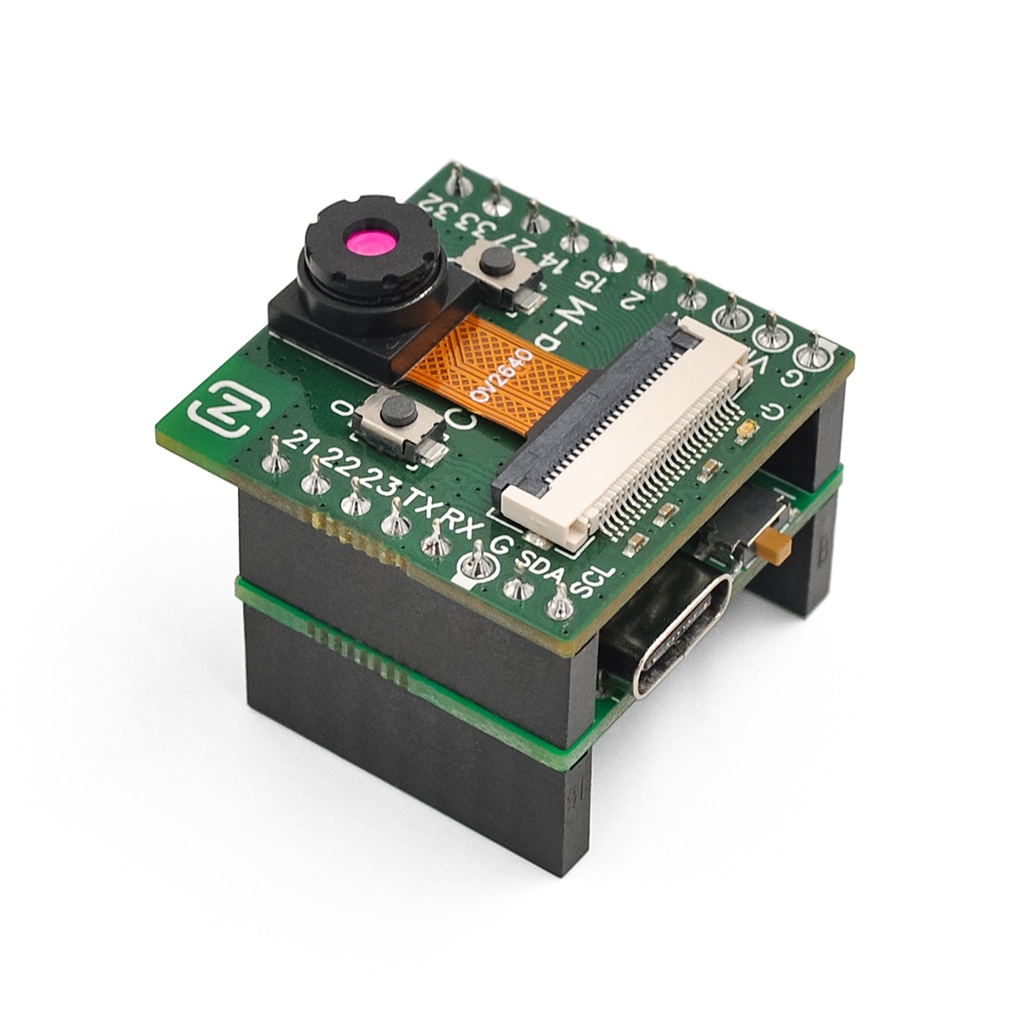
When using an ESP32 camera, leveraging the ESP32’s processing power to handle application logic, such as controlling external devices or executing remote commands, can reduce both coding and hardware complexity, without the need for additional controllers. In such cases, the more functions integrated into the module, the more system resources are consumed, which may limit available GPIO pins and affect flexibility. With this in mind, Camera-M follows a “Less is More” design philosophy, exposing as many resources as possible to give users greater control.
The minimalist design also makes the module smaller and lighter, ideal for size and weight constrained applications such as small quadcopters. Camera-M maintains a breadboard-friendly pin layout for easy prototyping.
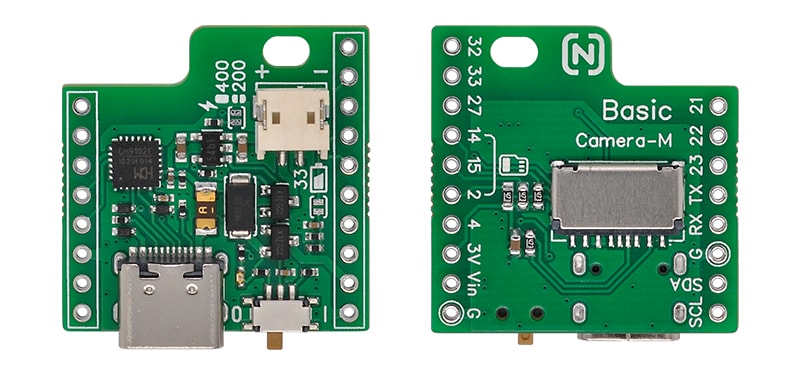
The optional Basic expansion board can be stacked with Camera-M, providing a USB serial interface for programming and debugging, an SD card slot for offline image storage, and charging management for lithium battery power. The expansion board can also be used as a standalone functional module.
Camera-M supports mainstream development platforms such as Arduino, PlatformIO, and ESP-IDF.
Testing
The module comes with preloaded firmware. Follow the steps below to perform the test:
- Power the board via the Vin pin (input range 3.7–5.5V) or through the Basic expansion board.
- On your phone, scan for a Wi-Fi network starting with
Node-and connect to it (password:nodenode). - Open the web browser on your phone and enter
192.168.4.1in the address bar. - Through the webpage, you can view real-time video or modify network settings.
Features & Specifications
Camera-M
- Design based on ESP32 microcontroller
- 240MHz dual-core Tensilica LX6 processor
- 2.4GHz Wi-Fi 802.11b/g/n
- Dual-mode Bluetooth (classic and BLE)
- 4MB QSPI Flash
- 8MB QSPI PSRAM
- OV2640 image sensor
- Maximum resolution: 2M pixels (1600 x 1200)
- Output format: 8/10-bit raw, RGB, YUV and compressed
- Maximum image frame rates: UXGA 15fps, SVGA 30fps, CIF 60fps
- Unregulated power input 3.7-5.5V
- 200mA 3.3V LDO regulator output
- 10 x GPIO, UART and I2C ports broken out
- Low power friendly
- RTC I/O broken out
- Camera power control
- Breadboard-friendly design
- Works with ESP-IDF and Arduino platforms
- Product dimensions: 26.4mm x 26.4mm x 9mm
Basic Shield
- USB-C serial port converter
- SD card slot
- Lithium battery charging capability
- Power switch
- Product dimensions: 26.4mm x 26.4mm x 7mm
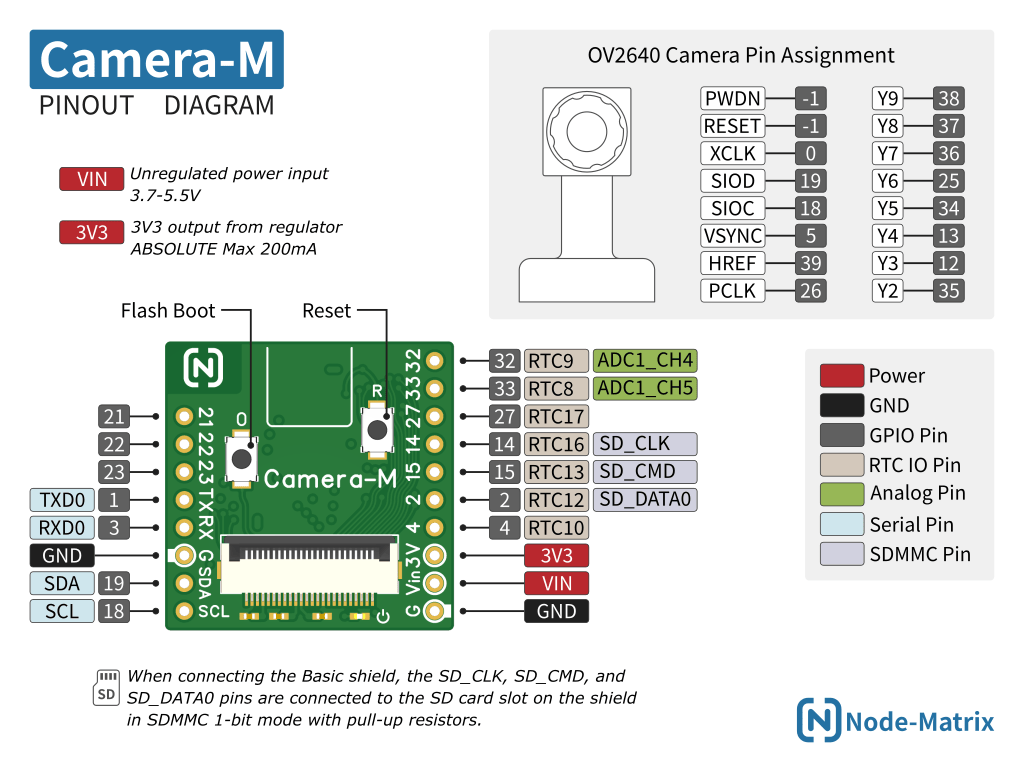
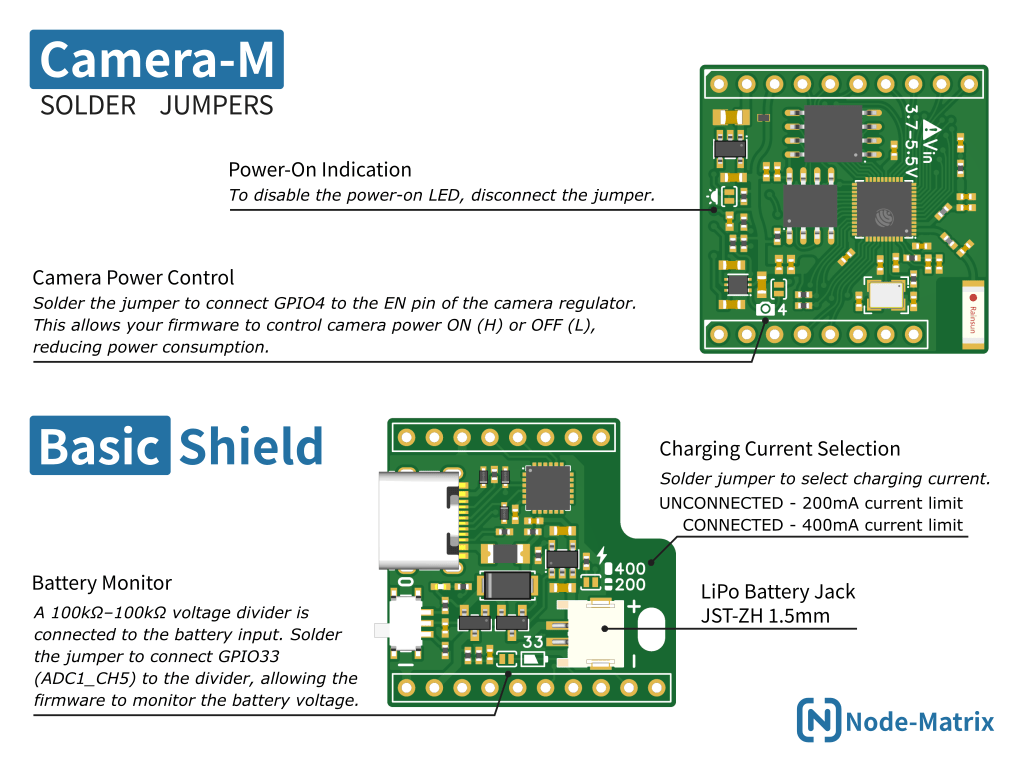
Pinout & Jumpers